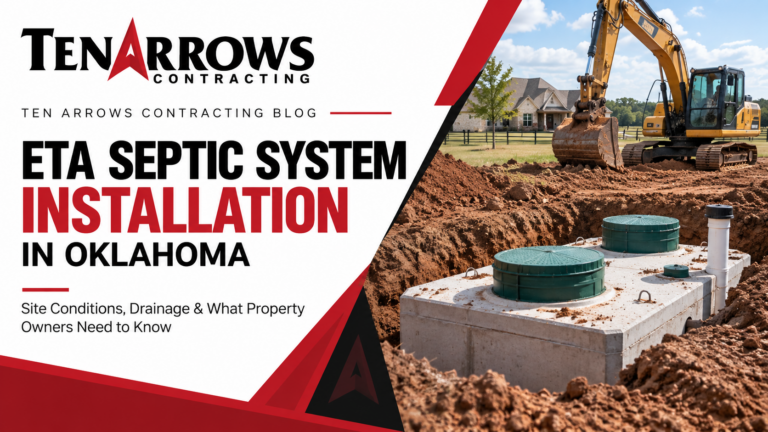
Every successful build starts with the ground beneath it, and getting that ground ready takes two distinct phases: mass grading and foundation excavation. They are often mentioned in the same breath, but they solve different problems at different points in a project timeline. Mass grading shapes the land. Foundation excavation locks in the structure’s exact position within that shaped land.
As an excavation contractor Oklahoma property owners and general contractors trust for heavy civil work, Ten Arrows Contracting LLC walks every site through this sequence before equipment ever touches soil. Slopes, rock, drainage patterns, existing structures, utility conflicts, and limited access all shape how a job unfolds, and a heavy civil contractor who understands that sequence protects the schedule, the budget, and the finished site.
Mass Grading Comes First and Sets the Stage
Mass grading is large-scale earthwork. It reshapes an uneven or undeveloped property into a workable site by adjusting elevations across the entire parcel, not just the footprint of a single structure. This phase typically includes:
- Clearing and stripping topsoil during land clearing
- Cutting high areas and filling low areas to establish grade
- Forming building pads and road corridors
- Shaping slopes that direct stormwater away from structures
- Preparing the site for drainage features and future utility work
Modern earthwork depends on precision, which is why GPS-guided equipment plays such a central role. Bulldozers and excavators equipped with machine control follow digital grading plans in real time, holding elevations and slopes to tight tolerances across large areas. That precision reduces rework and keeps building pads consistent with the civil engineer’s design.
Skipping ahead to foundation work before grading is complete creates real problems. Open excavations left exposed to runoff can flood, footing trenches can shift, and crews often end up correcting elevations they already thought were finished. On larger developments, grading may happen in phases rather than all at once. Ten Arrows Contracting LLC often rough grades an entire property first, then finishes individual building pads as each phase of construction becomes ready.

Foundation Excavation Locks In Structural Elevations
Once a building pad reaches its design elevation and the structure has been staked by survey, foundation excavation begins. This phase is precise rather than broad. It follows the structural plans exactly and coordinates with the grading work already completed. Typical foundation excavation work includes:
- Footings and grade beams
- Piers and pier holes
- Stem wall trenches
- Crawl spaces and basement walls
- Utility connections, including water line installation, shown on the plans
Depth, width, and layout all matter here. A footing trench that is too shallow, too deep, or off its layout lines can delay inspections and push back concrete placement. Water management is just as critical. A sudden Oklahoma rain can turn a clean trench into standing water fast, softening bearing soil and causing trench walls to slough. Planning for temporary drainage, stabilized access routes, and sump pumping keeps excavations workable and keeps concrete and reinforcing crews on schedule.
A Typical Oklahoma Site Development Sequence
No two sites move through earthwork in exactly the same order, but most site development projects follow a pattern close to this:
- Site clearing, demolition, and erosion control
- Rough mass grading and drainage preparation
- Underground utility work, including water line installation
- Building pad preparation and compaction
- Foundation excavation and foundation construction
- Final grading around structures, roads, and other improvements
Conditions on the ground can reshape that order. Rock excavation slows production. Unsuitable soils may need to be removed before a pad is ready. High groundwater, retaining walls, stormwater facilities, road construction access, and permitting requirements can all shift the schedule. If a site holds water after rain, drainage work often has to happen before foundation excavation can move forward safely. Close coordination between the general contractor, engineers, surveyor, and the earthwork crew prevents duplicated digging and damaged utilities.

Planning Around Oklahoma Weather
Late summer heat leaves Oklahoma soils dry and hard, and fall storms bring runoff and erosion risk with little warning. That shift is exactly why grading plans build in flexibility instead of assuming dry conditions every workday. Temporary swales, diversion berms, sediment controls, and stabilized entrances direct runoff away from building pads and open trenches during grading, preserving workable soil for the phases that follow.
Once foundation excavation starts, timing gets even tighter. Watching the forecast and coordinating excavation with concrete scheduling keeps the window between digging, inspection, reinforcing, and pour as short as possible. Long-term drainage matters too. A properly graded site directs water away from structures, roads, and parking areas well after construction wraps, which means the sequencing decisions made on day one still pay off years later.
Start Site Prep With a Plan, Not a Shovel
Getting the sequence right, from land clearing through mass grading to foundation excavation, protects soil conditions, keeps drainage working the way it should, and keeps a project moving on schedule. Ten Arrows Contracting LLC brings GPS-guided equipment, experienced crews, and a clear process to every site development project across Oklahoma.
Ready to start your project on solid ground? Contact Ten Arrows Contracting LLC today for a free estimate.