
Septic line trouble usually gives warning signs before it turns into an indoor backup or a wet, damaged yard. Catching those signs early protects the property from wastewater exposure, soil damage, and larger disruptions.
Late summer makes septic concerns easier to spot in Oklahoma. Dry ground reveals wet patches that should not be there, while sudden thunderstorms put extra strain on a weakened septic system.
Slow Drains Can Point to a Septic Line Problem
One slow sink does not always mean a septic issue. When several drains slow down at the same time, the problem often extends beyond the fixture itself. Wastewater may be struggling to move through the line from the building to the septic tank, or through the lines carrying treated water into the soil.
Watch for changes that affect more than one room. A toilet that needs repeated flushing, a tub that drains slowly, or a sink that gurgles while water runs can all point to restricted flow. These issues tend to show up more after a busy morning, laundry day, or a house full of guests.
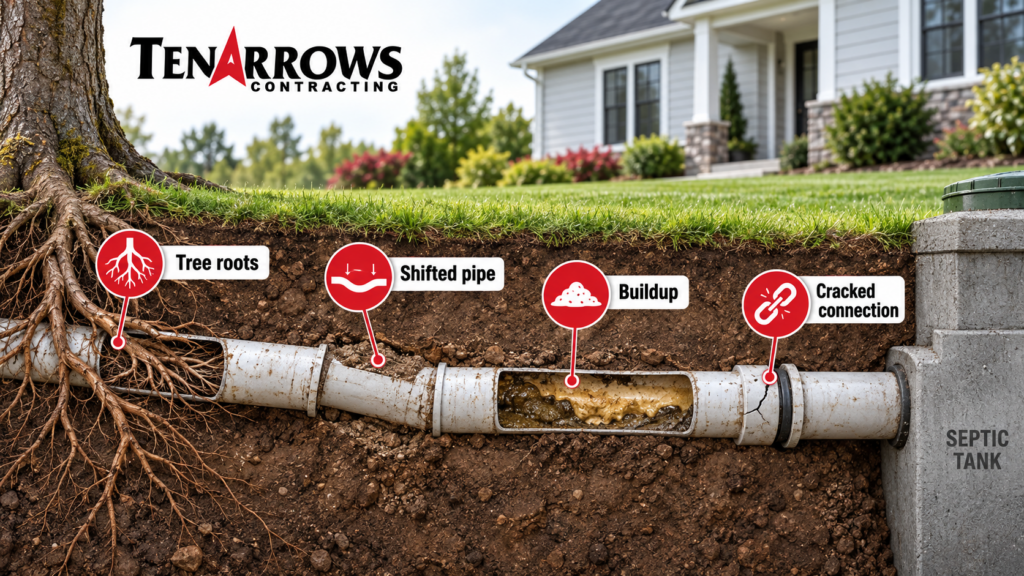
Common Causes of Slow Septic Drains
- Tree roots growing into or around a pipe
- Crushed or shifted pipes caused by soil movement
- Grease or waste buildup restricting flow
- Loose, cracked, or separated pipe connections
If drains improve once water use drops, the system may be struggling to keep up with normal demand rather than failing outright. A line blockage, damaged connection, or drain field issue is often behind the slow drainage rather than the tank itself.
Wet Ground and Odors Can Signal a Septic Leak
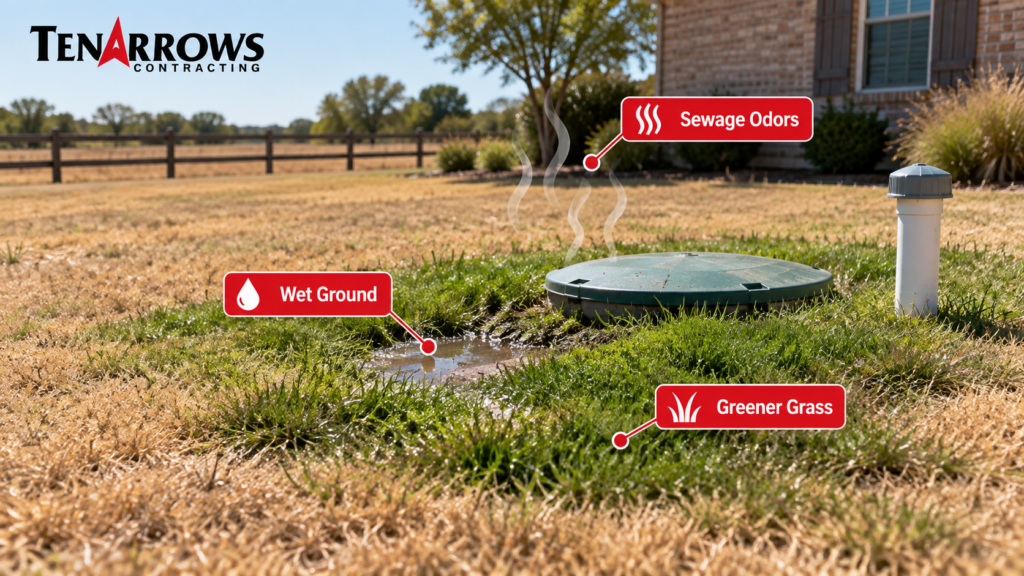
A healthy septic system keeps wastewater underground and moving where it belongs. Wet, soft, or unusually green spots near the tank, lateral lines, or drain field deserve attention, especially during hot, dry weather. If one area of the yard stays damp while the rest of the ground is dry, wastewater may be escaping from a damaged line.
Grass often grows faster in these areas because wastewater carries nutrients into the soil. Greener grass may not seem alarming at first, but it can signal that the ground is receiving water it should not be receiving.
Persistent sewage odors are another warning sign worth taking seriously, especially near the septic tank, outdoor drains, or a wet area in the yard. Odors often grow stronger after rain, during high water use, or when summer heat warms saturated soil.
Outdoor Signs of a Septic Line Issue
- Standing water near a septic component or cleanout
- Soft soil that feels wet underfoot
- A patch of grass that is greener than the surrounding yard
- Sewage odors that return or grow stronger after rainfall
Wastewater on the surface can affect landscaping, drainage patterns, and nearby structures. It can also mean the soil can no longer absorb wastewater the way it should.
Gurgling Fixtures and Sewage Backups Need a Fast Response
Gurgling from a toilet, sink, shower, or floor drain often happens when air gets trapped by a blockage or damaged line. Instead of moving normally through the system, that air pushes back through plumbing fixtures. An occasional sound may have a simple cause, but repeated gurgling throughout the building should not be ignored.
A sewage backup is a more serious signal. If wastewater rises into a tub, shower, toilet, or floor drain, reduce water use immediately. Flushing, washing clothes, running the dishwasher, and taking showers all add more water to a system that is already unable to move wastewater properly.
Outdoor access points can also reveal where trouble is building. Water or sewage around a cleanout, or wastewater rising from an exterior access point, often points to a blockage or failed section of line. Digging around septic components without the right equipment can create more damage, so a professional assessment is the safer path.
What Septic Tank Line Repair Involves
Septic tank line repair is rarely as simple as replacing one section of pipe. A cracked line, root intrusion, or separated connection may be the immediate problem, but the soil and drainage conditions around the system matter just as much. If poor drainage or shifting ground contributed to the damage, the same issue can return unless the site is evaluated as a whole.
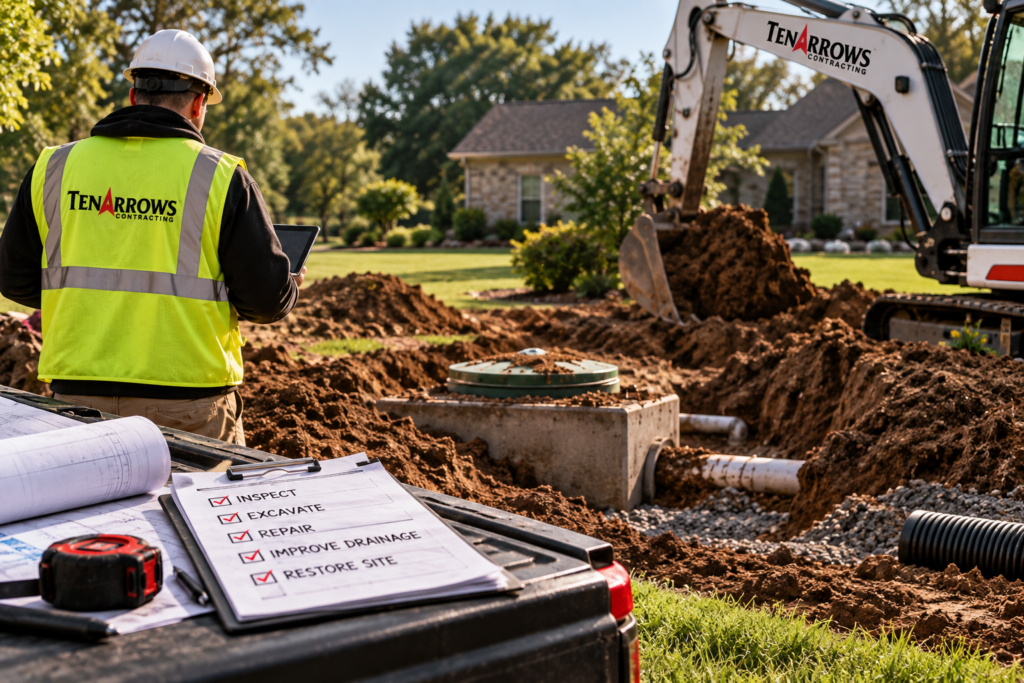
A thorough repair looks at the location of the trouble and the conditions around it. Excavation may be needed to locate the damaged area, remove failed pipe, and restore proper flow. In some cases, dirt work or drainage improvements also help manage water around the septic area and reduce stress on the system.
Catching the issue early limits how far wastewater travels through the property and helps preserve more of the surrounding yard, driveway area, and landscaping than waiting for a full backup or surface failure.
Assess Septic Warning Signs Before Heavy Rain
Heavy rain can expose a septic problem that has been building quietly for weeks. When the ground is already saturated or the system is struggling with normal use, a storm can make slow drains, odors, wet areas, and backups worse. Have any concerning signs evaluated before the next round of Oklahoma rainfall adds more water to the site.
The practical takeaway is simple: notice changes early and treat them as a warning, not an inconvenience. Multiple slow drains, gurgling fixtures, sewage odors, and wet ground near septic components all deserve prompt professional attention before they become an emergency.
Common Questions About Septic Line Repair
What are the first signs a septic line needs repair? Slow drains in more than one fixture, gurgling sounds, wet or unusually green patches in the yard, and sewage odors near the tank or drain field are typically the earliest warning signs.
Can a septic line problem cause a full backup? Yes. A blocked or damaged line that goes unaddressed can progress to a sewage backup inside the home, especially when heavy water use or rainfall adds extra stress to an already struggling system.
Does septic tank line repair always require excavation? Often, yes. Locating and repairing a damaged section of line, along with addressing any drainage issues around it, typically requires excavation to restore proper flow and prevent the problem from returning.
Protect Your Septic System With Timely Repairs
Ten Arrows Contracting LLC assesses septic line issues and provides dependable septic tank line repair tailored to your system’s needs. Our team identifies the source of the problem and works to prevent further damage. Contact us to schedule an inspection and get clear next steps for your septic line.